
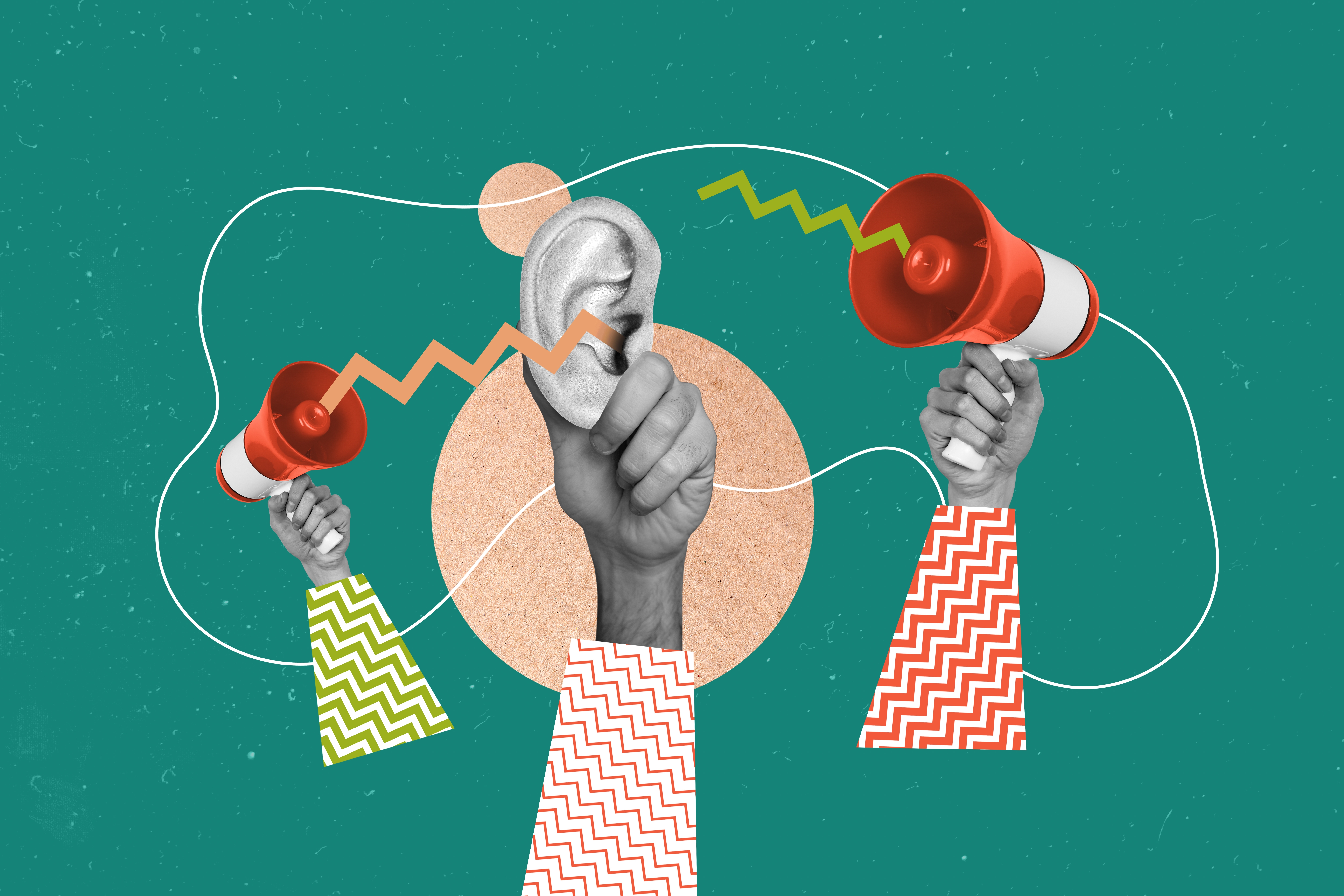
The intersection of art, politics, and rights has long been a contested space in the Arab region, where artists navigate complex relationships with power, censorship, and social resistance to change. Art, understood here in its broadest sense to encompass the full range of creative practices such as literature, music, theatre and drama, visual arts, digital art, photography, community arts projects, and other forms of collective cultural expression, is crucial to shaping political discourses, challenging authoritarian hegemonies, and imagining possibilities for social and political transformations. Under authoritarianism, an artist usually moves beyond aesthetic creation to areas of confrontation and negotiation in order to strike a balance between resistance and co-optation, and between creative autonomy and systemic pressure. Understanding this role requires examining how art can challenge, reinforce, or negotiate power structures, whether through resisting political repression and economic pressure, responding to censorship, or navigating the temptations of lucrative commodification. It also calls for a reflection on the evolving nature of artistic communities, solidarity networks, community-based cultural initiatives, and the broader political economy of cultural production in the region.
Rowaq Arabi Journal (RAJ), a peer-reviewed publication dedicated to human rights studies, is seeking research papers exploring topics about the evolving dynamics of the socio-political role of art creators in the context of authoritarianism in the Arab Region. The journal calls for the submission of abstracts for original research (in Arabic or English) drawing on interdisciplinary approaches in social sciences, humanities, and law. Abstracts of a maximum of 150 words should be submitted to rowaq.editors@cihrs.org along with the author’s CV and list of scholarly publications. Additionally, unpublished junior scholars are encouraged to submit full manuscripts instead of abstracts. There is no deadline, and we will process the submissions (of abstracts by published authors and full manuscripts by unpublished authors) as soon as we receive them until the plan for this issue is complete. The best and most relevant submissions will be sent to blind peer-reviewing. Authors of peer-review-approved manuscripts will receive financial remuneration upon publication. Papers that do not follow RAJ’s style guidelines – available here – will not be considered for peer-review.
RAJ suggests the following sub-topics for research while welcoming other suggestions relevant to the call as indicated above. Approaches can include case studies or comparative analyses.
- What is the role of the artist in contemporary authoritarian contexts in the Arab region, and how can art redefine political and human-rights activism beyond traditional frameworks of resistance while navigating the tension between its conservative and transformative potentials?
- What constitutes counterhegemonic art, what forms of domination does it confront, and how can artists forge new modes of resistance without lapsing into propaganda, didacticism, or co-optation?
- How can artistic critique, whether through practice or criticism, become a structural tool for unsettling authoritarian norms and reshaping the broader artistic landscape?
- How do authoritarian regimes and ideological currents seek to domesticate, discipline, or instrumentalise artists, and what strategies do artists employ to negotiate, subvert, or resist these pressures?
- In what ways do artistic practices challenge or reinforce the ideological foundations of authoritarian rule, whether by dismantling hegemonic discourses, reshaping collective consciousness, or articulating the grievances of marginalised communities?
- How is the relationship between art, society, and public space shaped under regimes that seek to dominate cultural life, and how does this dynamic influence artists’ strategies of resistance, adaptation, or solidarity-building?
- How do memorials, public art, and other spatialised forms of cultural expression become sites of political contestation, whether enforcing collective amnesia or supporting counter-memorial practices that preserve or reclaim suppressed histories?
- How does Arab diasporic art engage with transnational authoritarianism, navigating repression that extends beyond borders, and constructing alternative forms of political memory and community?
- How do censorship and patriarchal authority operate as intersecting systems of power that not only restrict expression but also become internalised modes of thought, shaping norms of permissibility, creativity, and social belonging?
- What are the broader social and psychological effects of censorship on critical and creative capacities, and how does censorship contribute to the production of ‘disciplined citizens’ who absorb authoritarian values as unquestionable truths?
- How can art expose and unsettle the tensions between resistance and compliance embedded within patriarchal structures, and in what ways can artists resist gendered expectations that impose narrow expressions of identity and belonging?
- How can diverse artistic practices, such as community arts, graphic novels, children’s literature, digital media, and other creative forms, serve as tools for human rights or legal education, catalysing enduring transformations in public consciousness or ‘humanising’ the law?
- How do funding structures, whether state patronage or private sponsorship, shape artistic autonomy, political vulnerability, and the possibilities for resistant or transformative cultural production?
- How can interactions between artists, audiences, and solidarity networks create spaces of negotiation and collective resistance, enabling art to function as a disruptive force against authoritarianism despite pressures of control and commodification?
Read this post in: