
Views: The Arab Political Mind Crisis in the Mirror of Middle Eastern Imperialisms
Citation: Hassan, Bahey eldin. 2026. “Views: The Arab Political Mind Crisis in the Mirror of Middle Eastern Imperialisms,” Rowaq Arabi 31 (2): 9-23. https://doi.org/10.53833/YTKR1910.
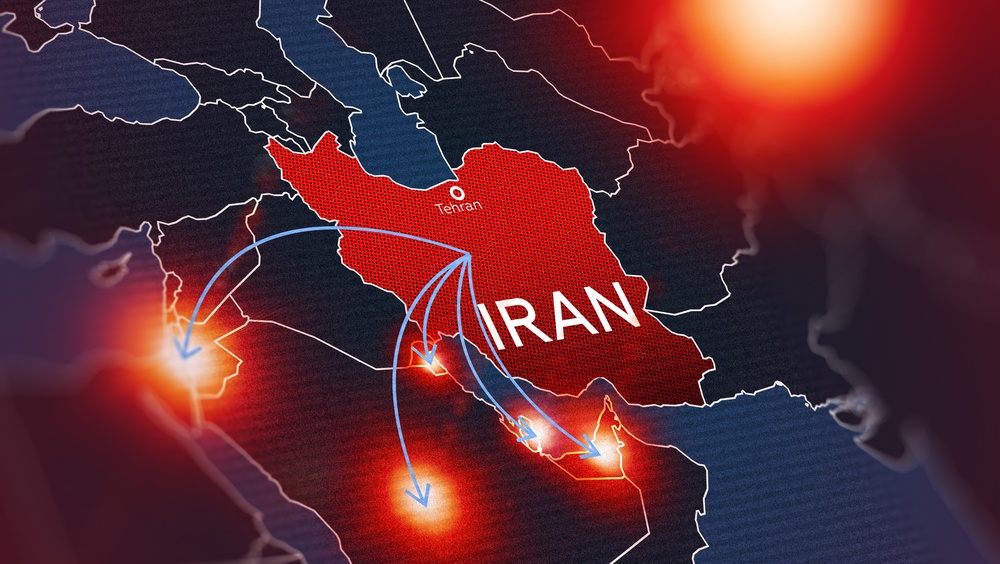
As bombs fall unchecked on Iran and the Gulf states, Arab political elites embraced political suicide, throwing themselves into a project first glimpsed thirty-five years ago. Does the future promise a belated awakening or portend further decline?
Since the United States and Israel launched their joint attack on Iran on February 28 of this year, and Tehran responded by striking the Arab Gulf states, heated debates have arisen among political, cultural, and media elites in the Arab world. Spilling over from social media into newspaper columns and television programmes, these disputes offer a real window into how elites view not only the war but also the world, the region, themselves, and their priorities.
A week after the war began, a brief exchange on X between Amr Moussa, the former Egyptian foreign minister and secretary-general of the Arab League, and Abdulrahman Al-Rashed, a prominent Saudi media figure, touched on the most significant points of contention from two different angles.[1] Thousands more people from the Arab region subsequently joined the ongoing debate, which will likely continue even after the guns fall silent. Reflecting on this collective debate, then, is of vital importance to anyone who wishes to understand political elites in the Arab world, assess the vitality of the Arab political mind, and draw comparisons between this moment and other major crises, such as the defeat of 5 June 1967, the Iraqi invasion of Kuwait in 1990, and the US invasion of Iraq in 2003. Such crises can function as a lens through which to view peoples’ mindset, political culture, and prevailing value system; they can dissolve the iron walls between conflicting ideologies, exposing the essence of a single political mind, stripped of the embellishments of Islamism, Marxism, or Arab nationalism.
In an interview for the Saudi newspaper al-Hayat thirty-five years ago with the late Egyptian thinker Fouad Zakaria about the lessons of the Iraqi invasion of Kuwait titled ‘The Question of Mindset First,’ Lebanese writer Hazem Saghieh posed a question: ‘Do you believe that we have learned, or are on the cusp of learning, new lessons?’ Zakaria responded, ‘We’ve learned very little from this catastrophe or crisis … It seems to me that the Arab individual’s capacity for learning at this stage of history is quite sluggish.’[2]
Four years later, Zakaria himself would organise an in-depth dialogue on the Iraqi invasion of Kuwait, bringing together a select group of thinkers, academics, and analysts from across the Arab world. In his closing remarks at the conference, he reiterated nearly verbatim what he had told Saghieh four years earlier about the Arab individual’s poor capacity for learning, adding, ‘I think self-flagellation is insufficient. Sometimes it seems to me that self-hanging is the word we should use.’[3]
From Orientalism to ‘Gulfism’
This year’s debates reveal a significant gap between the disputants, not only in their understanding of the crisis, but also in their apprehension of Arab social and political realities. Despite unceasing interaction between the Gulf and the rest of the Arab world in both directions—whether for work in the Gulf states or tourism elsewhere—clearly this has not offset the impoverished intellectual, cultural, and political dialogue between the two sides, or even within each Arab country. This stands in stark contrast to the vibrant, multi-level dialogue that has existed for centuries in each European country and among Western states in general. The gap is most evident among those in other Arab countries who apparently see the Gulf as nothing more than a few oil and gas wells run by a group of wealthy, corrupt Bedouins. Likewise, in debates surrounding the Iraqi invasion of Kuwait, broad swathes of Arab peoples showed no sympathy for the victims: the Kuwaiti people. At the time, Egyptian leftist thinker Ibrahim Saad al-Din explained that ‘in Arab circles there is what I would call a primordial resentment of the rich.’[4] But the Omani writer Abdullah Habib believes that this primordial hatred is aimed specifically at the people of the Arabian Gulf, to the exclusion of wealthy Arabs. Nearly three decades ago, Habib observed that citizens of the Arabian Gulf suffered from the ‘Orientalist’ gaze of other Arabs—including Edward Said, author of Orientalism. Habib called this ‘istikhlaj,’ or Gulfism,[5] meaning a stereotypical view of the inhabitants of a particular region (‘the East’ for Said and ‘the Gulf’ for Habib) based on deeply ingrained negative perceptions. Saudi academic Maisa al-Khawaja asserts that Egyptian cinema played a key role in entrenching Gulfism among the general public in Egypt and the Arab world.[6]
This stereotypical view explains why Arab elite debates show negligible awareness of the level and direction of societal development, state organisation, and higher education in most Gulf states, which favourably compares to other countries in the region. The top three globally ranked universities in the Arab world are in Gulf countries. Moreover, ongoing debates also reveal a failure to appreciate the constructive, enlightening role played by the three of these Gulf states in cultivating learning and culture throughout the Arab world, through print and broadcast media, publishing, translation, and the establishment of think tanks. Consider especially the exceptional contributions of al-Hayat, which enriched intellectual and political discourse, and the Kuwaiti magazine al-Arabi, which since the mid-twentieth century filled the void left by the eclipse of pioneering Egyptian cultural magazines like al-Katib al-Masri, al-Thaqafa, and al-Risala. Or look at the role played by the Qatari Al Jazeera, which has reached into every Arab home, supplanting the Egyptian radio station Voice of the Arabs, and the Arab Centre for Research and Policy Studies with its numerous academic outlets.
By the same token, some of the debating parties from the Gulf seem not to grasp the profound reversals experienced in the largest Arab country—Egypt—since the setback of the Arab Spring, and how these transformations have impacted the perspectives and psychology of elites, especially since some segments of them hold Gulf states responsible for the setback.
This gap in information, facts, contexts, perceptions, and psychology explains why these debates cannot be described as dialogues. They more closely resemble a verbal duel in a dark room between parties who can barely make each other out. Indeed, some people seem to be sparring with an imaginary party of their own making, while the truth—about each party, or about Iran—exists somewhere else entirely. Some of these debates also exhibit a glaring failure to grasp major facts about the Arab region and our contemporary world.
Who’s the Enemy?
This question gets to the heart of the gap between the parties to the debate. Many on both sides seem not to believe that a single state can have two or more enemies simultaneously. Some critics from the Gulf see both Iran and Israel as enemies, the former posing an immediate, direct threat to the Gulf, while the latter is a likely future, though not current threat. Meanwhile, critics from outside the Arab Gulf recognise only one enemy: Israel (supported by the US). The view of Iran among this latter camp ranges from an ally in a hypothetical Islamic alliance or an imagined southern liberation coalition, to the spearhead of the so-called Axis of Resistance against Israel and its allies. Again, it is striking that the proponents of each of these views are not united by a single traditional ideology, but by a positive perception of Iran and an unspoken agreement to dismiss any suspicions or anxiety about historical Persian imperial ambitions. An article by Mustafa Barghouti, titled ‘Good and Evil,’[7] perhaps best encapsulates the sentiment of this camp in his reduction of the present crisis to ‘a struggle between right and wrong, between injustice and justice.’ The statement issued by 200 Palestinian figures in late March can be placed in the same basket.[8] It is worth recalling that the historic leader of the Palestinian people, Yasser Arafat, declared in December 1990 following the Iraqi invasion of Kuwait: ‘Our revolutionary choice is for me to be in this trench facing Israel and facing America,’ completely ignoring the Kuwaiti people and offering them no sympathy.
Most people involved in this year’s debate cannot conceive of any other injustice besides the Palestinian one and so they overlook Gulf Arab citizens’ fears of Iran’s expansionist ambitions, both before and after the 1979 Islamic revolution. This can be seen in Iran’s occupation of three Emirati islands and its persistent aspiration to annex Bahrain, which Iran only recognised as an independent state after a referendum held under UN auspices, as well as Iran’s incitement of Shia minorities in the Gulf states and Shia majorities in Iraq and Bahrain against their governments. The same people also saw Iran’s attacks on Gulf states this year as targeting solely American bases in those countries, even though they hit a larger number of civilian facilities and even Oman, Iran’s preferred mediator before the war, which does not host US bases at all. In fact, while Iran suspended its attacks on Israel when the Pakistani-brokered ceasefire entered into force, it did not end its attacks on Gulf states the same day.
The debaters on this side ignore the significance of the establishment of the Gulf Cooperation Council in 1981, just two years after the Islamic revolution in Iran. The GCC is in part a military alliance, and after its founding, member states doubled their defence spending, while some later began hosting foreign military bases. When Israel bombed Doha last year, Saudi Arabia promptly signed a joint defence agreement with Pakistan.
Both this recent agreement and the establishment of the GCC reflect the diminished political and defence value of the joint Arab defence treaty, whose signatories failed to translate it into tangible reality despite its signing three decades before the creation of the GCC. The Arab League framework had already begun to crumble under the weight of inter-Arab conflicts in the era of Egyptian President Gamal Abdel Nasser and his Arab nationalist political campaigns against several Arab kings and presidents. The situation worsened when Egypt signed the Camp David Accords with Israel, after which Cairo was punished by the relocation of the league’s headquarters to Tunis, and it deteriorated further with Saddam Hussein’s invasion and occupation of Kuwait and the subsequent need to call on American forces to liberate Kuwait, with the support of Arab troops.
It is true that in 1990 the Arab League resumed its operations from Cairo and has since been led by an Egyptian secretary-general; however, Egypt no longer holds the organization’s political reins—Saudi Arabia does.
Those steeped in Gulfism may attribute Saudi Arabia’s assumption to regional leadership to wealth, but they should reflect on the dynamic role Saudi diplomacy, in coordination with France and with the support of several European states, has played in reviving the Palestinian cause after al-Aqsa Deluge and placing the issue of a Palestinian state on the UN agenda despite the resistance of then-US President Donald Trump. Had these events occurred two or three decades ago, Egypt would undoubtedly have been leading the initiative in Saudi Arabia’s stead. There seems to be no bottom, however, to Egypt’s current decline. Equally important is that the Gulf states, collectively, have proved remarkably capable of deploying their own advanced defensive weapons against the daily Iranian missile and drone attacks, which outnumber the attacks on Israel eight-and-a-half fold.[9]
These current events and well-known historical facts fail to give some debaters in the Arab world pause. Indeed, the statement referenced above by the 200 Palestinian figures calls on the Gulf states to relinquish the protection of foreign bases without proposing any alternative. This stance is almost identical to that of some Arab political elites following Iraq’s invasion of Kuwait: they opposed the appeal to foreign forces to liberate Kuwait, despite their conviction that Saddam Hussein would not withdraw from the country voluntarily and that Arab forces alone could not defeat his army.
Regional Ally or Regional Imperialism?
Many of those drawn into today’s debates ignore the devastating Iranian impact on the foundations of four Arab states (which, ironically, were considered part of Nasserist Egypt’s vital sphere): Yemen, Lebanon, Syria, and Iraq. The shah’s ambitions were limited: he sought to ensure that his country remained the regional policeman of the Gulf after the withdrawal of British occupation forces. That changed with the Islamic revolution, however, which brought to power a theocratic regime seeking to export its political ideology and religious doctrine. It’s no coincidence that Shia Muslims constitute an influential demographic and political force in three of the four targeted countries and a majority in the fourth. As part of the Iranian regime’s ‘forward defence’ strategy, enormous resources were invested in establishing, arming, and training militias that are not subject to the authority of their respective states, but rather take their orders from the Iranian Revolutionary Guard Corps. These militias fight the IRGC’s battles in their home countries and help to advance its priorities in other states. Hezbollah, Iraqi militias, and Shia mercenary groups from some West Asian states, such as the Pakistani Zainabiyoun Brigade and the Afghan Fatemiyoun Brigade, all aided in the suppression of the Arab Spring uprising in Syria. Moreover, during the nearly decade-long war between Iran and Iraq, several Iraqi Shia citizens fought in the ranks of the Iranian army against fellow Iraqis, some of whom now occupy influential political and militia positions within the current Iraqi government. These militias also launched attacks on Syria and the Gulf states in coordination with the Iranian regime.
Some analysts contend that Iran exemplifies ‘regional imperialism’ in the Middle East, and that its so-called forward defence strategy is not defensive, but rather an ambitious offensive aimed at competing with two other regional imperial powers (Israel and Turkey) to fill the vacuum left in the region by the gradual US withdrawal from the region over the last two decades.[10] In its confrontation with American imperialism and Iraq, and thanks to its material and human resources, Iran has evolved into a regional imperial power ‘that simultaneously dons the mantle of resistance against a Zionist enemy.’[11]
Regional imperialism is ‘a limited geopolitical hegemony exercised by a rising capitalist state within its sphere of influence. It aims to reproduce relations of dependency through a combination of tools including economic influence, indirect intervention, and symbolic control, without engaging in a global imperial project.’[12] Since the Islamic revolution, Iran has believed that it deserves a more prominent place in the global system as a major player. Based on its religious doctrine, population size, geographic location, vast surface area, and imperial Persian heritage, Iran does not view its neighbours as equals, but rather parties to be subordinated by various means. Employing aggressive negotiation tactics, it seeks ‘international recognition of its influence and its right to a nuclear programme, and to that end, it mobilises its bargaining chips—namely, the so-called resistance states.’[13]
Regional imperialism does not necessarily entail the occupation of other countries’ territory provided it is not considered an integral part of the imperial state. This is how Turkey, which has the second-largest army in NATO, has approached the territories it occupied in Syria and Iraq during its pursuit of the Kurds, while it has refused to relinquish Alexandretta, which it has considered part of its own territory for decades. Similarly, Israel returned the Sinai Peninsula to Egypt, along with Gaza and southern Lebanon, while considering the West Bank and the Golan Heights as Israeli territory. Likewise, Iran views the three islands it seized from the UAE as its own. While a regional imperial power may achieve its hegemonic ambitions through seemingly less brutal means, it does not hesitate to commit acts of genocide, as Iran has done in Syria and Israel in Gaza.
According to the Egyptian academic Mohamed El-Sayed Said, Iraq under Saddam Hussein was a regional imperialist state in the making.[14] It sought to dominate its neighbours, among them Syria, Saudi Arabia, and the Gulf, and even occupied Kuwait, while using the liberation of Palestine as a smokescreen and means of Arab mobilisation. Accordingly, Said urged a re-evaluation of the Marxist theory of imperialism, arguing: ‘Imperialism should be distinguished as a policy, not as a specific social reality… In most colonies, capital was not exported… The deeper aspect of imperialism is that it is a policy that essentially aims to use coercive political or military tools to gain political, economic, or cultural advantages.’[15]
Axis of Resistance or Demolition and Fragmentation?
Iran was not an occupying force in Syria, but it was a direct partner in the political, security, and military decisions that devastated the country, killing nearly half a million Syrians and displacing millions more across the globe. Most Arab Spring elites failed to adopt a political and moral stance on Iran and Syria commensurate with the magnitude of this political and, even more importantly, humanitarian catastrophe. Indeed, some elite figures, particularly from Egypt and Tunisia, visited Damascus to declare their immoral support for the president who waged one of the most heinous and brutal wars of extermination in the region against his own people, on the grounds that Syria was a member of the Axis of Resistance in support of Palestine and against Israel since the time of President Hafez al-Assad.
Palestinian academic Yezid Sayigh writes:[16] ‘Syria arguably exerted the greatest direct influence of any Arab state on the course and politics of Palestinian armed struggle.’ It enjoyed extensive influence in Lebanon and thus ‘controlled the overland movement of guerilla supplies,’ meaning the arteries for vital Palestinian needs and weapons. He quotes an editorial in Filastin al-Thawra, the official mouthpiece of the Palestine Liberation Organisation, asserting that President Assad ‘spent his life combatting the [Palestinian] revolution,’ noting that such a serious statement would not have been made in an editorial by the editor-in-chief without the personal approval of Yasser Arafat. A later editorial mocked the Syrian army for shelling Palestinian refugee camps in Lebanon instead of Israeli settlements in the Golan Heights.
In Lebanon, Iran has been the de facto ruler of the country for two decades through Hezbollah, which has served as its political, security, and military arm. With Iranian assistance, Hezbollah seized control of the Beirut airport and border crossings with Syria, even as it dominated the Lebanese political system, protecting a political class that has plundered and bankrupted the state.[17] The group assassinated the prime minister and several prominent Lebanese political, media, and cultural figures, both Shia and non-Shia. It helped suppress the Arab Spring uprising in Lebanon, which had called for ‘fighting corruption and dismantling the system of patronage, and it similarly halted the investigation into the Beirut port explosion, preventing the exposure of the truth in order to protect a ruling system of which it is a part.’[18]
Thanks to Iran, Hezbollah possesses an arsenal of heavy weapons, including advanced missiles, which it refuses to hand over to the Lebanese army. It also established a private communications network among its supporters, refusing to subordinate it to state control. This network was eventually breached by Israel, which assassinated its secretary-general, Hassan Nasrallah, and killed and wounded many Hezbollah members and supporters in a coordinated single-day operation. And because Hezbollah maintains its military operations headquarters in civilian areas, Israeli targeting of these headquarters and leadership positions has resulted in immense civilian casualties and the deaths of numerous civilians uninvolved in its military activities. This, of course, does not imply any Israeli concern for civilians or adherence to international law.
Hezbollah openly declares its allegiance to the supreme leader of Iran. Following Israel’s assassination of the supreme leader this year, the group bombed Cyprus and resumed its attacks on Israel in retaliation (not for the sake of Lebanon or Palestine). Coordinating its operations with Iran, for the first time, the party issued a joint statement to this effect with the IRGC, disregarding the decisions of the Lebanese president, the Cabinet, and parliament. This triggered Israel’s third occupation of southern Lebanon, has resulted in the killing of over 1,000 Lebanese, the wounding of approximately 2,500 others, and the displacement of nearly one million citizens, or twenty per cent of the population.
Since its inception, Hezbollah has never declared its readiness to ‘surrender its weapons if the Israelis withdraw.’[19] It has no Lebanese military strategy that would justify the steep human cost borne by the Lebanese people. It has played a limited role this year, daily serving Tehran’s plan by exhausting and distracting Israel’s air defence systems, thus allowing Iranian ballistic missiles to penetrate its airspace. When, after fifty days of conflict, a Washington and Tehran agreed on a two-week ceasefire, the latter made it conditional on the inclusion of Lebanon, thereby asserting its control over decisions of war and peace in the country. Beirut rejected this usurpation of Lebanese sovereignty despite an advisor to the Iranian supreme leader warning that Lebanon would face ‘irreparable security risks’ in doing so![20]
Students of Egyptian history will likely note the similarity between such threats and pronouncements of the British high commissioner in Egypt in the first half of the twentieth century. Even if Iran had occupied Lebanon, it would likely not enjoy this measure of influence. Tehran approaches northern Yemen in a similar way, working through the Houthis, who seek to turn back the clock in Yemen to the Middle Ages and the Imamate overthrown by the Yemeni revolution of 1962. That revolution, backed by Egypt, claimed the lives of several thousand Egyptian soldiers.
In Iraq, Iranian imperial hegemony is not based solely on the country’s Shia Muslim demographic majority. Additionally, its Iraqi supporters are more politically organised than their compatriots, support sophisticated, well-trained armed factions estimated at a half a million strong, and have penetrated the Iraqi state apparatus. Some factions operate legally within these institutions, both military and civilian, under the banner of the Popular Mobilisation Forces (PMF), which burnishes their legitimacy and gives them access to public funds. Others operate semi-covertly, with some of their members belonging both to groups integrated into state institutions and to those operating underground. Iraqi researcher Harith Hassan believes that this unusual organisational structure is not new, but rather modelled on the IRGC, which has become the ultimate centre of political, economic, and military power in Iran.[21] Is this the future of Iraq with the PMF? It is worth noting that these semi-clandestine Iraqi groups are allegedly responsible for the assassination of prominent figures of the Arab Spring in Baghdad and southern Iraq in 2019, the abduction of foreigners, and assaults on Iraqi journalists conducting field investigations.
These groups are closely bound to Iran on the ideological, security, and economic levels, pursuing all means to ensure Iran’s continued status as a regional power.[22] Accordingly, they supported Tehran in the wake of the US-Israeli aggression this year, bombing the US embassy in Baghdad, a US military base, an Iraqi intelligence headquarters, an Iraqi airport, and political and administrative headquarters in the Iraqi Kurdistan region. In coordination with Iran, they have also bombed some Gulf states, Jordan, and Syria, issuing statements, at times coupled with video footage, claiming responsibility for some of these recent attacks under the banner of ‘Islamic resistance.’ This prompted the head of Iraq’s Supreme Judicial Council to warn of the dangers of usurping the power of the legitimate, elected Iraqi state bodies to make the decision to wage war,[23] cautioning against the country’s slide towards the fate of Lebanon and Yemen. Iraq’s former prime minister also raised the alarm: ‘In short, any military weaponry maintained in parallel to state weaponry is a weapon against the state, regardless of its intentions.’[24]
The Iraqi foreign minister explained how these Tehran-linked groups control the functioning of the Iraqi state by combining ‘an organised military force with parliamentary power.’[25] Invoking the fate of Lebanon, he added, ‘If the situation escalates into a military confrontation, I don’t know who the balance of power will favour because these groups are ideological, and fighting an ideological group is different from fighting a regular military force … I don’t think the Iraqi army is prepared to wage an internal war.’ Yet, ideology is not necessarily the problem, which may instead be, as in Lebanon, a lack of political will and readiness to fulfil constitutional duties.[26]
In fact, we are talking about a dismembered state, or rather states. Naturally, Iran, the rising regional imperial power, need not occupy Iraq. The hegemony, support, subordination, and fealty it seeks can be had without paying the price of occupation like the US did. Iranian imperialism functions in a near identical way in Iraq, Lebanon, and Yemen: all three states are run by armed militias that are stronger militarily than the national army. They usurp political decision-making at all levels and manipulate it to serve Tehran’s interests and bolster its regional influence, including by fighting wars that harm the people of all three nations first and foremost. True, Iraq, Lebanon, Yemen, and Syria are failed states in need of divine intervention to rise again, but Iran’s imperial influence in the Middle East grows stronger every day.
It is a sad irony that bodes poorly for the future of the Arab world that in the twenty-first century. The supreme leader of Iran has become a compass for modern Arab political and cultural elites simply because these oppressors of the Iranian people, along with their affiliated militias, who champion medieval values in several Arab countries, spout words like ‘resistance’ and ‘steadfastness,’ and embrace hostility towards Israel and the US. Can Lenin’s critique of revolutionaries’ obsession with revolutionary phrases and intoxicating slogans explain the descent of some Arab elites? Or Mohamed El-Sayed Said’s critique of what he called ‘pseudo-radicalism’[27] which is similar to a hollow drumbeat?
The Legitimacy of Resistance in the New Era
Cataclysmic political crimes have been committed under the banner of the Axis of Resistance and in the name of Palestine. ‘Yes, Israel temporarily occupied territories in Arab states and annexed some of them (the Golan Heights and Jerusalem),’ writes Palestinian writer Majed Kayali, ‘but in the last two decades, Iran has achieved what Israel has failed to do since 1948: to fracture the structures of state and society in four Arab countries through the sectarian militias it sponsors, funds, and arms.’[28] This bitter reality may explain the desire of influential political forces in both ruling and opposition circles in Iraq, Lebanon, Yemen, Syria, and the six Gulf states—nearly half of the Arab League—to see Iran defeated by US and Israeli aggression. A Syrian writer argues that the cost of continuing the war until the ruling regime in Tehran is overthrown may be lower than the cost the Arab world bears as a result of the continuation of this regime.[29]
Clearly, there is significant divergence in the interpretation of good and evil, or around the question of friend or foe. Do these forces constitute a majority or a minority among political elites in ten Arab countries?
Although this question elicits diverse responses, there is no denying the significance of this major political shift. Whatever the answer, it underscores three major new facts: first, a yawning, unprecedented rift exists among Arab political elites, regardless of ideological differences; second, the idea that resistance is the solution faces a formidable moral and political dilemma; and third, the Palestinian question is no longer the central cause in the Arab world, nor a unifying factor among the region’s peoples.
If these conclusions are correct, then the strategic and existential predicament of the Palestinian people, which has been gradually worsening for seventy-eight years, confronts an unprecedented challenge that cannot be reduced to a struggle between good and evil. Of course, the nature of this predicament differs from the two Nakbas of 1948 and 1967, but its implications and political repercussions are no less severe than either of these catastrophes, particularly since the crystallisation of these facts coincides with two other negative developments on the Palestinian landscape. First, since al-Aqsa Deluge the material conditions necessary to realise the Palestinian people’s right to an independent state have rapidly deteriorated due to the immense destruction caused by the genocidal war in Gaza and Israel’s continued occupation of nearly sixty per cent of its territory and the cancerous expansion of Israeli settlements in the West Bank, which compounds the difficulty of integrating its components into a single geographical entity. Second, given such tragic circumstances, a Palestinian political consensus around a calculated roadmap in pursuit of the agreed-upon legitimate goal has come unravelled.
Polling since al-Aqsa Deluge has shown a decline in the political legitimacy of the Palestinian leadership in both the West Bank and Gaza and a concomitant consensus around the leadership of imprisoned activist Marwan Barghouti, whom the Israeli government is planning to execute. Given this, the municipal elections of 25 April understandably seemed more like a funeral for the death of politics among the most politically engaged of Arab peoples. These facts also explain why the internal elections for the leadership of Hamas became yet another arena for the conflict between two regional imperial powers.[30]
Half a century ago, there was little debate in the Arab world about the question of good and evil or enemy versus ally. The conflict was black and white, with no room for grey in the struggle between ‘colonialism and its agents,’ to use Nasserist rhetoric. In turn, there was no room for the luxury of demands for political or economic freedom, or for oversight of public spending and the performance of governing institutions. Then came the second catastrophe on 5 June 1967, when territories in three Arab countries were occupied within a few days.
The question of good or evil and friend or foe began to be heard in public discourse in the region following two major, simultaneous events: the signing of a peace agreement between Egypt, the largest Arab country, and Israel at Camp David and the victory of the Islamic revolution in Iran. Although the immediate significance of the two events differed dramatically, they combined, albeit with different dynamics, to propel the region in the same direction: gradual rapprochement with Israel, whether tacit or open. The Abraham Accords, a Gulf initiative, would have been inconceivable without the momentum generated by these two events. As Iran, with its inflammatory religious rhetoric and nuclear ambitions, became more aggressive, Egypt, the elder sister, no longer presented itself to the Gulf as a regional protector, but rather a beggar for money and political support, even amid Egypt’s internal power struggles. Four developments are significant in this context: first, Egypt’s reliance on the Israeli air force to combat terrorism in Sinai over the past decade; second, Egypt’s transformation into an entrepot for Israeli gas destined for the Levant; third, the agreement reached by the Lebanese government and Israel in their negotiations in Washington this April to disarm Hezbollah as a shared objective; and fourth, indications that three additional Arab states (Saudi Arabia, Syria, and Lebanon) have decided to normalise relations with Israel and are awaiting an opportune moment.
These milestones undoubtedly complicated the answer to the question of good and evil. The opportunistic exploitation of the right of resistance does not compromise the legitimacy of the Palestinian people’s right to resist the occupation and determine their own destiny, but as Mohamed El-Sayed Said observed, it is essential not to reduce resistance to military action. Three decades ago, he argued that achieving and building a Palestinian state is possible without resorting to military means, and perhaps even more effective.[31]
Notably, Yezid Sayigh, in his seminal study of the Palestinian national movement from 1949 to 1993,[32] concluded that armed struggle as a strategy effectively ended in 1982 with the withdrawal of Palestinian forces from the last Arab country bordering Israel. While not denying the right to resist the occupation through occasional acts of resistance, Sayigh argues that such sporadic operations should not be taken as part of an integrated, effective strategy for achieving the stated goal. ‘The armed struggle probably could have achieved no more, at any time, than the offer of transitional autonomy made in 1978 [in the Camp David process],’ he adds.
Over the course of seventy-eight years, Israel—an artificial entity in common Arab parlance—has evolved from a religious mythology into the only state in the region to have transitioned to a post-industrial stage, while not a single Arab state has done so. This would not have been possible without modern state institutions, a dynamic political and civil society, and advanced education. Meanwhile, several Arab states have dismantled the state institutions built and developed by their citizens during the struggle for independence in the first half of the twentieth century. At least six Arab states—Libya, Sudan, Yemen, Lebanon, Iraq, and Syria—face the existential question of their continuation as unified nations, while the largest Arab country, Egypt, survives on handouts with each new fiscal year. Many Arab states need a political—and perhaps even criminal—inquiry into what their leaders have done to their countries since gaining national independence.
There is a widespread tendency to attribute Israel’s economic and military superiority to US support, but this ignores the evolution of the political and military relationship between the two countries into a partnership of equals. In parallel, the Israeli economy has grown while its civilian and military industries have become more technologically sophisticated. The US and Germany are the leading importers of Israeli-manufactured weapons,[33] while Europe continues to import raw materials and agricultural products from Arab states. Half a century ago, American aid made up twenty-three per cent of Israel’s GDP and nineteen per cent of its budget. Although the value of this aid has remained relatively stable, it now represents less than one per cent of GDP, which has increased nearly tenfold, and three per cent of Israel’s budget.[34] According to the Institute for Palestine Studies, ‘The structural transformations in the Israeli economy have come to fruition over the last two decades. The state has successfully consolidated a liberal economy based on modern economics, high-tech industries, innovation, foreign investment, and integration into global markets.’[35]
‘Colonial conspiracies,’ to use the old Nasserist exculpatory rhetoric, cannot explain, whether on logical, scientific, or moral grounds, the Arab world’s persistent failing scores since independence in indicators such as education, health, poverty, corruption, economic and technological development, the effectiveness of state institutions, civil society, freedom of the press, freedom of information, and political freedom, nor can they explain Israel’s progress in these same areas. This no doubt further complicates to the dichotomy of good and evil and poses challenges that transcend the legal realm for those developing strategies for the Palestinian people’s struggle.
Polemics of Oppression
Since the Arab Spring setbacks, there has been a decline in the influence of the three main ideologies of Marxism, Islamism, and Arab nationalism. After its centrality in public discourse and political activism in the Arab world for nearly a century, these ideologies have been almost entirely absent from Arab debates on the American-Israeli aggression on Iran, replaced by a polarised realignment behind narratives with no direct relation to any of the three ideologies.
All three ideologies ostensibly revolve around the defence of the world’s oppressed, although their definition of oppression naturally differs. Remarkably, these champions of the oppressed have not seen fit to express solidarity with the Iranian people, crushed under the yoke of a despotic and corrupt theocratic regime that violates the most basic human rights and has publicly executed several prominent figures who fought for the oppressed and against the shah’s tyranny. Some Arab participants in the current debates even consider solidarity with the Iranian people to be a mercenary stance!
Those who denounce solidarity with the Iranian people and the peoples of the Gulf have likely never shown solidarity with the Syrian people, victims of the genocidal wars waged by the Assads, or with the Kuwaiti people in the face of the Iraqi occupation, or with the Kurds and Shia of Iraq who were victims of Saddam Hussein’s genocidal wars, or with the Sudanese people amid the ongoing genocidal war, in which ‘colonialism’ is not a party.
Political elites in the Arab world, across the three ideological factions, seem to still be beholden to the opportunistic Nasserist mantra of rallying behind the sole leader against eternal external forces, at the expense of the moral and material needs of human development. I wonder, is this elite unification around Palestinian oppression a manifestation of their solidarity with the Palestinian people or their solidarity against Israel and its supporters? These are two different things, for not every blow to Israel advances the realisation of the legitimate goals of the Palestinian people or improves the conditions of their struggle. Moreover, a major downside of the focus on a single injustice, like Palestinian oppression, is that other injustices—in most Arab states, existing since national independence—are shunted aside. As a result, elites before, during, and after the Arab Spring have proven unable to cultivate a critical mass capable of opening new political, economic, and social horizons for progress.
It has also harmed the Palestinian cause itself, as these same elites were unable to mobilise their people behind their overriding injustice in solidarity with Palestinians during genocidal war in Gaza. In contrast, millions of people, among them Jews, demonstrated weekly in solidarity with the Palestinian people in Western capitals and cities, just as these same peoples, using the same standard, have risen up for decades in response to other injustices, whether against US aggression in Vietnam, Iraq, and Iran, the Russian occupation of Ukraine, and the wars of Arab annihilation in Iraq, Syria, Sudan, and elsewhere. Meanwhile, the Arab masses have become, ‘a virtual entity,’ in the words of the Lebanese writer Hazem Saghieh.
Last century, as Arab peoples came out of the darkness of nearly four centuries of Ottoman domination, they were shocked at the extent of European progress. The question preoccupying Arab intellectuals became: ‘Why have they progressed while we have fallen behind?’ They gave multiple answers, but backwardness persisted and perhaps even worsened—even in the solidarity shown with the central injustice—even though we import all of their advanced products, including artificial intelligence, while Ottoman traditions continue to restrict human intelligence.
The international order has been collapsing since the beginning of this century, even before the war on Iran. While the state of political and cultural elites in the Arab world is no exception to this decline, there are specific historical causes at play. The debates raging among political elites in the Arab world this year are prompting the human rights movement to reassess its agenda, priorities, and daily discourse, at a time when the global predicament intersects with the chronic failure of state development in the Arab world and an unprecedented crisis for human rights values and the human rights movement itself.
The adverse impact of regional dynamics on the minds and hearts of human rights activists in the Arab world over the past thirty months—from al-Aqsa Deluge of 7 October 2023 to the ceasefire in the war with Iran on 7 April 2026—may well surpass the impact of the previous thirty years’ developments. It could galvanise the movement’s most positive energies, propelling it onto a more vital upward trajectory. Or the movement could go with the prevailing winds, thereby meeting the unfortunate fate of the three main currents among political and cultural elites of the Arab world.
AI Assistance Statement
The author used no AI tools or programmes.
This article is originally written in Arabic for Rowaq Arabi.
[1] Abdulrahman Alrashed (@aalrashed), “Your Excellency, we love and respect you, but frankness is necessary..” X, 7 March 2026, accessed 29 April 2026, https://x.com/aalrashed/status/2030336881712652494.
[2] Fouad Zakariya, al-Thaqafa al-‘Arabiya wa-Azmat al-Khalij [Arab Culture and the Gulf Crisis] (Hindawi Foundation, 2025; first published 1991).
[3] Mohamed El-Sayed Said et al., Al-ghazw al-ʿirāqī lil-Kuwayt: al-muqaddimāt – raddud al-fiʿl wa al-waqāʾiʿ – al-tadāʿiyāt [The Iraqi Invasion of Kuwait: Preconditions – Reactions and Events – Consequences], (National Council for Culture, Arts and Letters – Kuwait: 1995).
[4] Ibid.
[5] Suleiman al-Muammari, “al-Qahira Taktub wa-Bayrut Tatba‘ wa-l-Khalij Yastakhlij [Cairo writes, Beirut prints, and the Gulf Gulfifies]” Oman Daily, 29 April 2026, accessed 29 April 2026, https://bit.ly/4ttJUzr.
[6] Middle East Council on Global Affairs, “Tahawwulat al-Wa‘i al-Ma‘rifi: Min al-Istishraq al-Klasiki ila al-Istikhlaj al-Mu‘asir [Transformations of Epistemic Consciousness: From Classical Orientalism to Contemporary ‘Gulfisation’]” YouTube, 21 April 2026, accessed 29 April 2026, https://www.youtube.com/watch?v=C6oHU2_B5f8.
[7] Mustafa Barghouti, “Fi al-Sira‘ bayn al-Khayr wa-l-Sharr,’ [In the Struggle Between Good and Evil]” al-Arabi al-Jadid, 22 March 2026, accessed 29 April 2026, https://t.ly/oDNsv.
[8] Wattan, “Quwa wa-Mu’assassat wa-Shakhsiyat Wataniya Filastiniya: La li-l-‘Udwan al-SahyuAmriki ‘ala Iran wa-Lubnan wa-Filastin [Palestinian National Forces, Institutions, and Figures: No to the Zionist-American Aggression against Iran, Lebanon, and Palestine]” 26 March 2026, accessed 29 April 2026, https://www.wattan.net/ar/news/483433.html.
[9] Ria Reddy et al., “Iran Update Evening Special Report,” Critical Threats Project at The American Enterprise Institute, 4 March 2026, accessed 29 April 2026, https://tinyurl.com/32z6u83z.
[10] Anne Alexander, “al-Dinamiyat al-Mu‘asira li-l-Imbiriyaliya fi al-Sharq al-Awsat: Tahlil Awwali, [Contemporary Dynamics of Imperialism in the Middle East – A Preliminary Analysis],” trans. Sayyid Siddiq, Revolutionary Socialists, 3 September 2018, accessed 29 April 2026, https://revsoc.me/theory/38328/.
[11] Ahmed Nabawi, “Iran al-Lati La Na‘rifuha: Ra’smaliya didd Amrika wa-Imbiriyaliya Mu‘adiya li-Isra’il,’ [The Iran We Do Not Know: ‘Capitalist’ against America and ‘Imperialist’ Hostile to Israel]” Al Jazeera, 23 March 2026, accessed 29 April 2026, https://t.ly/dbMNW.
[12] Sattar Jabbar Rahman, “al-Imbiriyaliya al-Iqlimiya: Azmat Tashazzi al-Imbiriyaliya al-‘Alamiya,’ [Regional Imperialism: The Crisis of Fragmentation of Global Imperialism]” European Centre for Middle East Studies, 3 July 2025, accessed 29 April 2026, https://mevp.ecmes.academy/sattar/5664/.
[13] Nabawi, ‘The Iran We Do Not Know.’
[14] El-Sayed Said et al., The Iraqi Invasion of Kuwait.
[15] Ibid.
[16] Yezid Sayigh, Armed Struggle and the Search for State: The Palestinian National Movement, 1949–1993 (Oxford University Press, 1997).
[17] Michael Young, “Realism and the Lebanon-Israel Talks,” Malcolm H. Kerr Carnegie Middle East Center, 15 April 2026, accessed 29 April 2026, https://carnegieendowment.org/middle-east/diwan/2026/04/being-realistic-about-lebanon-israel-talks.
[18] Hossam Eitani, “Arwahuna al-Rakhisa wa-Qadayana al-‘Azima [Our Cheap Souls and Our Great Causes]” al-Majalla, 21 April 2026, accessed 29 April 2026, https://t.ly/y75h.
[19] Hazem Saghieh, ‘‘An Mawt al-Hadath, [On the Death of the Event]” Asharq al-Awsat, 29 April 2026, accessed 29 April 2026, https://t.ly/11Z2H.
[20] Young, “Realism and the Lebanon-Israel Talks.”
[21] Harith Hassan, “al-Shi‘iya al-Muhariba: al-Hashd al-Sha‘bi wa-Muhakat al-Haras al-Thawri, [‘Militant Shiism’: The Popular Mobilisation Forces and the Emulation of the Islamic Revolutionary Guard Corps],” al-Arabi al-Jadid, 5 April 2026, accessed 29 April 2026, https://t.ly/AVUfC.
[22] Renad Mansour, “The Iran War Comes to Iraq,” Foreign Affairs, 31 March 2026, accessed 29 April 2026, https://www.foreignaffairs.com/united-states/iran-war-comes-iraq.
[23] Faiq Zeidan, “I‘lan Halat al-Harb Dusturiyan [The Constitutional Declaration of a State of War]” Asharq al-Awsat, 27 March 2026, accessed 28 April 2026, https://t.ly/5pYsR.
[24] Mustafa al-Kadhimi, “al-Mu‘dala al-‘Iraqiya wa-l-Hall al-Basit [The Iraqi Dilemma and the Simple Solution]” Asharq al-Awsat, 9 April 2026, accessed 29 April 2026, https://t.ly/4fplS.
[25] Sankar Abd al-Rahman, “Wazir al-Kharijiya al-‘Iraqi li-Rudaw: Hunak Naql wa-Istiqbal Rasa’il bayn Amrika wa-Iran bi-Shakl Ghayr Mubashir,’ [Iraqi Foreign Minister to Rudaw: There is Indirect Exchange of Messages Between the United States and Iran]” Rudaw Arabia, 23 March 2026, accessed 29 April 2026, https://www.rudawarabia.net/arabic/interview/230320261.
[26] Rustum Mahmoud, “Shi‘at al-‘Iraq: al-‘Askar wa-l-‘Askara,’ [‘The Shiites of Iraq’: The Military and Militarisation]” al-Majalla, 22 April 2026, accessed 28 April 2026, https://t.ly/mWQ6p.
[27] El-Sayed Said et al., The Iraqi Invasion of Kuwait.
[28] Majed Kayali, “Ma Fa‘alahu al-Nizam al-Irani fi al-Mintaqa wa-fi Baladihi Dhatiha,’ [What the Iranian Regime Has Done in the Region and in Its Own Country]” al-Majalla, 20 March 2026, accessed 28 April 2026, https://t.ly/NVmCF.
[29] Alya Mansour, “Indamā Takūnu Kulfat al-Ḥarb Aqall min Kulfat al-Tahdiʾa,” [When the Cost of War Is Lower than the Cost of De-escalation] Al Majalla, 21 March 2026, accessed 29 April 2026, https://t.ly/gwk41.
[30] Abd al-Moneim Mahmoud, “Mustaqbal Jama‘at al-Ikhwan al-Muslimin fi ‘Alam Ijtithath al-Muqawama,’ [The Future of the Muslim Brotherhood in a World of the Eradication of Resistance]” al-Manassa, 10 January 2026, accessed 29 April 2026, https://manassa.news/stories/29733.
[31] Mohamed El-Sayed Said, “Iftitahiya: Madrasatan fi Bina’ al-Dawla al-Filastiniya,’ [Editorial: Two Schools in Building the Palestinian State]” Rowaq Arabi 4 (1): 6–15, accessed 29 April 2026, https://cihrs-rowaq.org/two-schools-in-building-the-palestinian-state/.
[32] Sayigh, Armed Struggle and the Search for State.
[33] Mathew George et al., Trends in International Arms Transfers 2025 (Stockholm: Stockholm International Peace Research Institute, March 2026), https://doi.org/10.55163/OSMS3959.
[34] Raphael Benlevi, ‘America Should Be Israel’s Partner, Not Its Patron,’ Foreign Affairs, 22 April 2026, accessed 29 April 2026, https://www.foreignaffairs.com/united-states/america-should-be-israels-partner-not-its-patron.
[35] Mtanes Shehadeh and Ian Khatib, “al-Iqtisad al-Isra’ili,’ [The Israeli Economy],” in Dalil Isra’il 2025, ed. Himmat Zaabi et al. (Institute for Palestine Studies, 2025), https://www.palestine-studies.org/ar/node/1658237.
Read this post in: